The Night No One Assigned Me
When I was a child, there was always a handful of sunlight left in the house when I came home from school.
As I put down my bag and changed my clothes, the air in the room felt loose and unhurried. Unfinished homework waited quietly on the desk, and I knew tomorrow would bring another day just like this one.
But that day, in the brief silence filling the room, I suddenly wanted no part of the currents carrying the world along.
I wasn’t after anything grand. I only wanted the act of picking up a pencil on my own to leave some small scratch on the far edge of a day that turned like a treadmill. The first night I ever picked up a pencil was probably just like that. On a blank sheet of paper I started drawing a Star Wars stormtrooper, my favorite thing back then, and when I came back to myself a bluish dawn was settling soundlessly over the window frame.
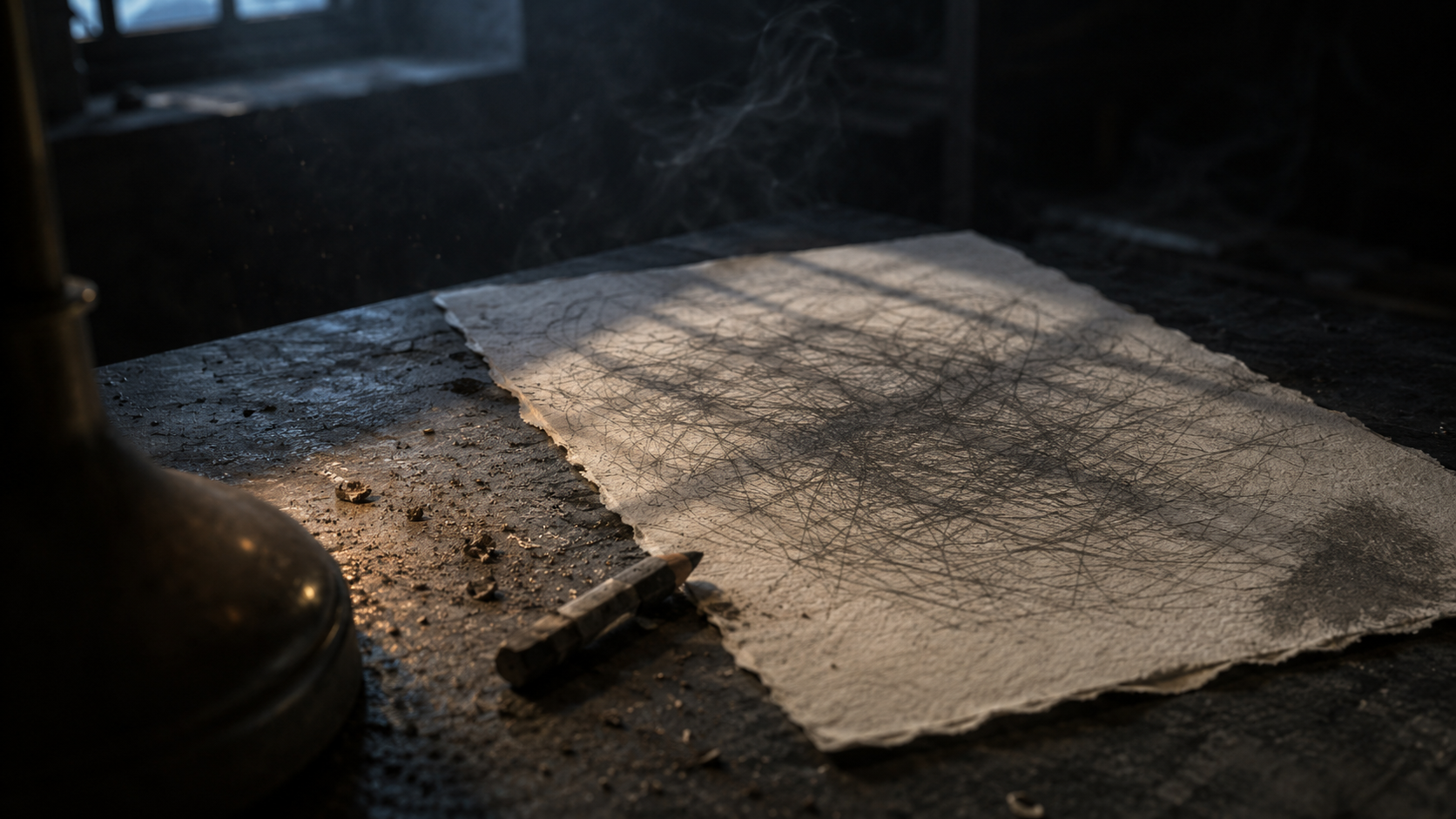
Whether it came out well did not matter in the slightest. While I laid down black lines and filled in clumsy shadows, the hours in that room crumbled quietly away. I had stayed up the whole night without closing my eyes, and still what came over me was not exhaustion but a new sensation — some grain inside me ripening into something hard.
I think that was when I dimly understood.
That a hobby was not simply a way of scattering leftover hours into nothing. It was a rite: shutting the door tight and walking quietly into a secret territory only I could enter. That was the essence of the hobby I had been granted.
The World My Fingertips Made
I slipped into the refuge called a hobby simply because I wanted to be free. The daytime world mostly runs on other people’s rules and other people’s tempo. Fixed hours to arrive and leave, procedures that sometimes made no sense at all, the shabby weight of my own time as measured by someone else’s yardstick. I had believed I was walking under my own will, but night after night I was overtaken by the hollow feeling that I was only sliding helplessly along the track of an enormous gear.
So when I came back to my room I longed for a world with a completely different grain from reality. As though something were after me, I opened the sketchbook and felt my way along old guitar strings. It did not matter whether the line went crooked, whether I erased a half–written sentence without a second thought, whether a botched dissonance circled the room. All of it was warmth, hot and shaped by my own fingertips.
The single fact that I had, against everything, started something with my own two hands opened up a breath that had risen to the edge of my chin, and it felt like a small miracle. Because of it, inside that cramped little room, I could be entirely free.
Unfinished work had blood running through it that could still become anything. Because it had not yet hardened into any one shape, neither judgment nor failure could reach it. The fog of possibility that rose from such a harmless warmth was unbearably sweet.
But the season of freedom did not last. The moment the desire to do better stepped in, freedom melted away like frost. Before I knew it, drawing had sunk into a cold blueprint that measured nothing but proportion and perspective. White paper was no longer a place where anything could happen; it became an exam sheet on which I had to prove my skill, and it pressed down on me.
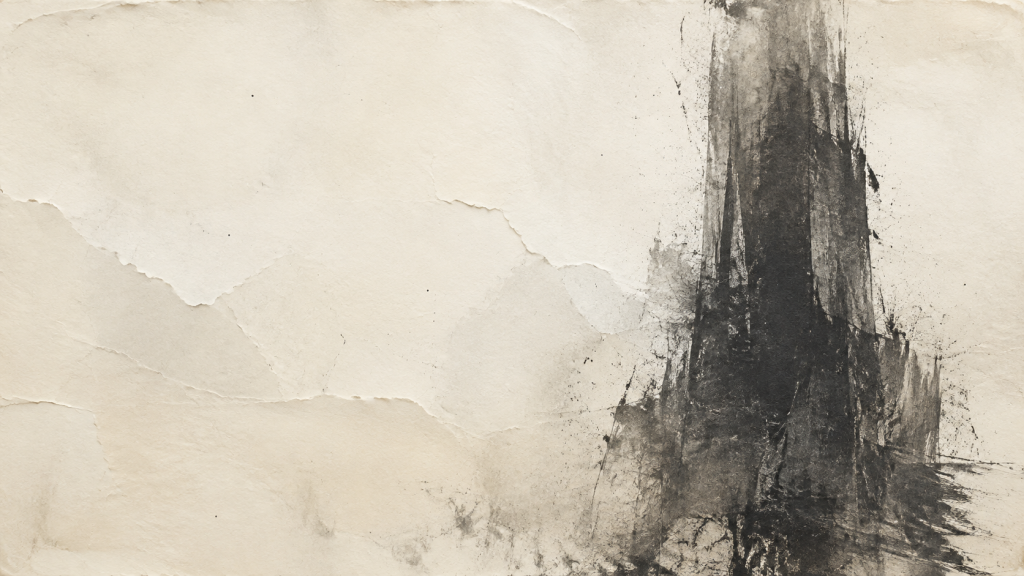
All I had wanted was to shape something with my own fingertips, and yet when I looked up I was standing alone at the foot of an impossibly high tower. It was the moment the warm shelter I had trusted to hold me turned instead into the cold yardstick that measured me.
A strange habit had crept up on me. Before I could see what I wanted to make, everything I had failed to make blocked the view. The distance seemed immense before I had even reached out. Again and again, I rose from my chair empty-handed, with nothing to show for my eagerness. Driven from the desk, I drifted toward the bed. There, I had nothing to finish and no need to prove myself. The place I fled to was quiet.
The Nights I Lost Track of Time
Lying in bed and mechanically swiping through a screen felt cozy, but a thick emptiness always lingered at the end. My body had rested while my mind seemed to have crumbled like a dry leaf. In that stillness, the trace of a life that had actually passed through the self called “I” was faint at best.
Rather, the moments when I willingly let myself be held for a long while were closer to a bowstring drawn taut. They were unlike the helpless fatigue that gnaws at the soul. It was a lucid, cutting tension in which a mind that had drifted through empty space finally gathered at a single point.
Only then did the outlines of my wandering hobbies begin to show. I had always swung like a precarious pendulum between boredom and anxiety. The easy tasks within reach soon lost their interest, while the drawing I wanted so badly shone far away, like the moon in the night sky.
Putting the image in my head onto paper, intact, was no ordinary daily task for me. It was like looking up at a tall, frightening tower I could not even bring myself to approach.
And still I never carved the small, concrete stone steps that would take me up that tower. The direction of the line I should draw today, the range of motion I should train my hand in — I left them vaguely blank. That vicious ache of repetition, which will raise a callus out of whatever you hold. In front of it, I only closed my eyes, quietly, like a coward.
During the day, the work in front of me was already decided. There was a task at hand, and it was not hard to tell how far I had come. But at night, when I returned to my room, it was different. What to do and how far to take it were both up to me. I often stopped short before the very freedom I had wanted.
There was no kind hand to stop me and say, “That’s enough for today.” That was exactly why I always circled the edge of the forest called work and never walked in.
The Escape That Called Itself Preparation
Instead of filling the blank document, I tidied the folder structure until it was immaculate and gathered materials and courses without end. Each time, a safe illusion rose in me that I was getting something done. At first I believed it was preparation — that I could only begin once I knew more. But at some point I saw it for what it was: the most cunning escape of all, wearing the mask of preparation.
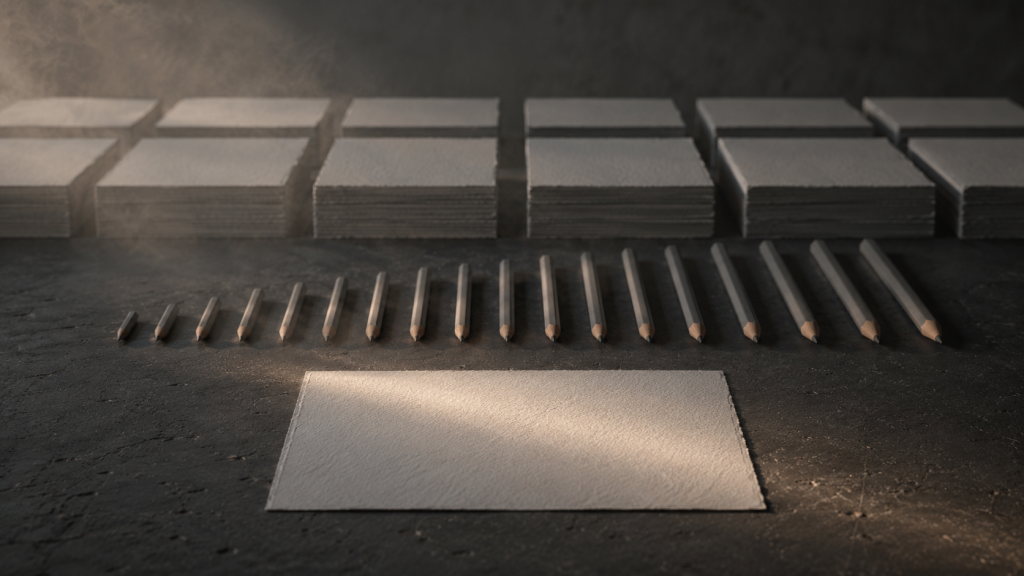
What this age lacks is not knowledge. The flood is the problem. Turn on a screen and countless summaries pour out, along with convenient tools promising to spare you the effort. Flip through a few pages of a book on craft, watch a lecture video, and the illusion arises that you have already entered the world of writers. A few lines of prompt and something plausible is already there; you smooth over the sentences an artificial intelligence handed you and console yourself that you have arrived.
But my hands, in fact, are perfectly innocent. The blank document holds no trace of a thought pushed all the way to its end. Information piles up enormously in my head while my body does not change in the slightest. In my imagination I have already crossed a distant river, but on the real workbench there is nothing but dust, layer upon layer.
Hesitating Before Freedom
I lingered for a long time in front of that dust. I had come there in search of freedom, but when no one told me what to do that day, I found myself unable to choose anything at all.
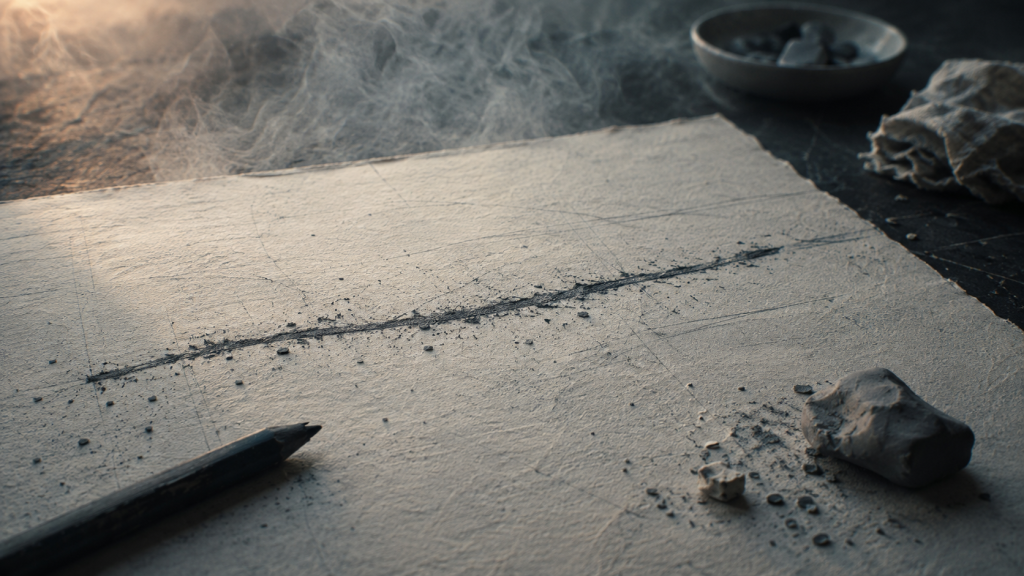
Looking back, everything I chose out of a craving for freedom belonged to the world of self–study.
In front of an empty sheet of paper. I observed the shapes of things and the paths of light as if my life depended on it. But the form built perfectly inside my head collapsed helplessly the instant it was carried onto the page. I had to look straight at that process — the ideal in my imagination losing its shape — with my eyes wide open.
No matter what I strained to grasp, the view was always much the same. After circling the same ground again and again, I would find myself back at the starting point.
What I had chosen mattered less than I thought. Wherever I went, the distance between the ideal in my head and what remained at my fingertips refused to close. I had no choice but to endure that gap and try to fill it in my own way.
Being alone was not the problem. What I lacked was the resolve and the system to keep walking alone. I had fled into a world where no one gave orders, then stood still because no one was there to pave the road.
Why the Fog of Possibility Is So Sweet
That is also why the state of possibility was so sweet. Finishing is like a judgment, because the moment a work is completed, what it reveals is nothing other than the meager skill I possess right now.
An unfinished sketch tossed into a corner, by contrast, gives the illusion that it might hatch into something great at any time. So I loved this thick fog of possibility for a long while. I comforted myself that it was all right because I had not finished, and deceived myself that it was not failure because I had never truly thrown myself at it.
But possibility may be a starting point; in itself it is nothing. In the end, unless you plant both feet on the ground and lift your body up, the reality that surrounds you stays exactly where it is, unchanged for a single day.
Flow does not arrive in a daydream. It comes when I grasp one possibility among countless others, let the other choices go, and finally move my hands. When I dare to draw the first line instead of browsing a list of courses. When I put the shape from my imagination onto paper, however clumsy it looks.
Music works much the same way. Even an improvised melody only finds its full sound once a few chords and rhythms have sunk into the bones. Freedom is not another word for doing whatever I please. It is the hard callus that finally forms on my fingertips after the dull hours of repetition. A result gained through a shortcut may be sweet, but it cannot change me.
Getting it wrong with my own hands, looking the result straight in the face, staying a while in front of something half–made. Whatever has not passed through that time can never become mine, however convincing it looks.
Not the Tower, but One Stair
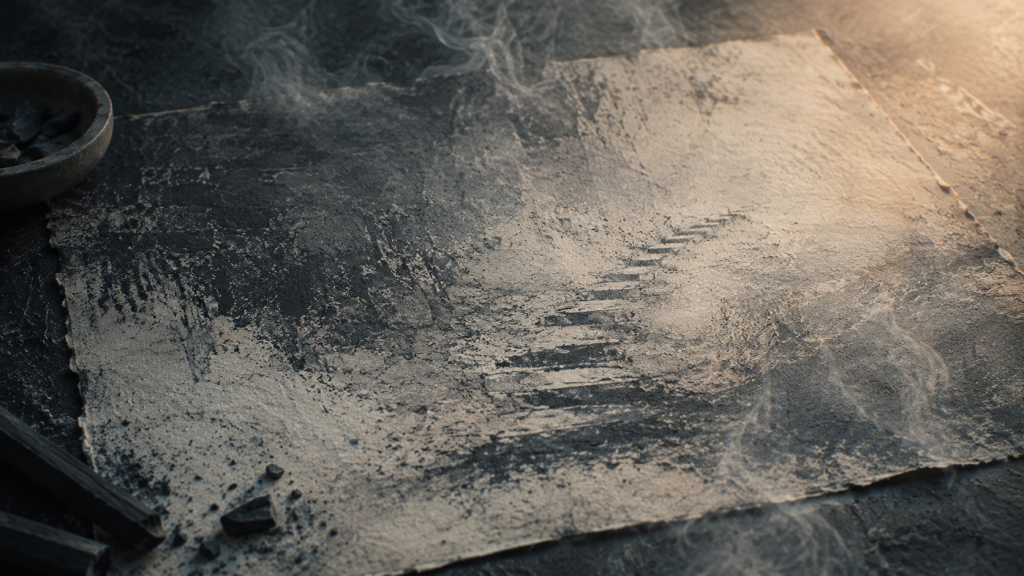
So what I need now is not salvation. One small but definite task that my body can manage today is enough.
Let go of the compulsion to finish everything. Leaving a small trace is enough. Today's task is not a finished product. It should be a low, definite foothold, something I can somehow manage to set my foot on.
A single small task cannot be a chain that binds my possibilities. It is only a rope pulling me out of the fantasy where I had been hiding and into reality.
Even so, I still favor a comma trembling with uncertainty over a firm full stop. I was born inclined toward unknown possibility rather than a finished world. That high tower will remain far away from me, and the days when my fingertips turn cold and rigid before its overwhelming enormity will come for me again and again.
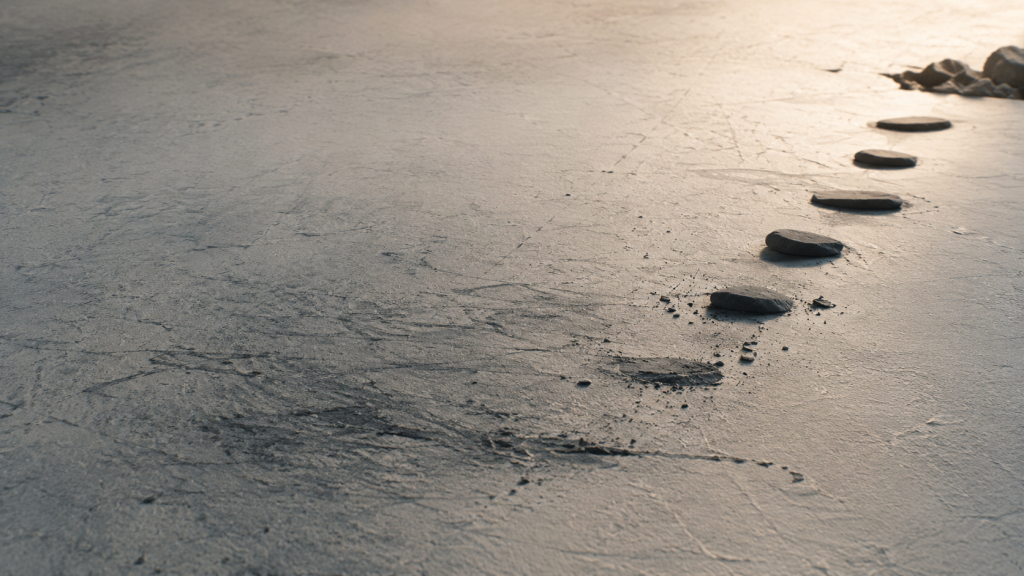
But now I know. I do not need to climb the enormous tower in one breath, nor is there any reason to freeze, overwhelmed by its height. All I have to do is carve out one small step at the foot of that distant tower, a step I can set my foot on today.
Today’s result is nothing remarkable. Still, a faint mark remains on my fingertips, proof that I touched something along the way. Today, at least, I am glad my hands are not entirely innocent.
Comments0Read and comment
Different opinions are welcome. Comments containing advertising, repeated posts, hate or threats, or someone else’s personal information may be removed.
Leave a reply